WELCOME


Hudson Valley's Collaborative Regional Alliance for Farmer Training is a cooperative effort of local organic and biodynamic farms organized to enhance educational opportunities for farm apprentices. This blog covers what host farmers and CRAFT presenters have shared with the future farmers in attendance of Lower Hudson and Mid Hudson workshops.


HOW TO COMMENT:
Anyone can comment, just click on X comments link below each post.

10 August 2010

A 21st Century Trend for Hudson Valley Growers: Portable Farming

Hearty Roots Community Farm
Mid Hudson C.R.A.F.T.
Monday, June 2, 2010

With sales in the first year at $20,000 to more than $330,000 six years later, Hearty Roots Community Farm located in Red Hook, Dutchess County originated as a 30 person CSA and is now up to 440 shares. Amazing! It is no wonder the USDA recognizes organic and local foods as the fastest growing market in agriculture.

The time has come that I am officially in awe of small scale growers that efficiently compliment the use of human and mechanical labor to achieve maximum food production while considering both economic and ecological longevity. Hearty Roots began with one inexperienced farmer on less than an acre of rented land and has grown to now be twenty-five acres of cultivation or cover crop with two head farmers and a staff of five. Ben, one of the two current head farmers, said to the group that evening of the summer solstice that “starting a farm is challenging, but do-able.” His shared words of wisdom were that starting small and expanding are how best to build a successful farm.

Hearty Roots is a completely portable farm. The farmers here would ideally like to have permanent access to land through a land trust arrangement, or less preferably, through private ownership. Since the beginnings and as of now, land is being rented with an annual hand shake to seal the deal. Not a single permanent structure of their own on the property; the walk in cooler, irrigation system, and tractor shed are all temporary structures shifted yearly to best accommodate the farm.

We walked the field to find ourselves amongst picturesque pastoral perfection (NOTE PHOTO AT TOP OF BLOG PAGE). Along a gently rising slope Hearty Roots lies in the low lands adjacent the estate owners’ Greig Farm, a blueberry and apple orchard operation. Due to actions with respect to pesticide applications by this farming neighbor, Hearty Roots may not become USDA organic certified even if they wanted to.

Their water supply is a large pond and the falling rains. A tractor-powered water pump feeds into a drip line and over heat sprinkler irrigation network. That day their pond was quite dry, reduced to no more than a puddle.

To minimize costs, or rather, to not spend money they do not have, equipment was borrowed in the early years, and as the farm acquired funds used-equipment was purchased one implement at a time. Hearty Roots has accumulated $100,000 worth of farming equipment in its short six years, without loans. I walked away from this workshop itching to get behind the wheel of a tractor. The field tour ended with the equipment. (Always save the best for last.)

One thing that I find particularly helpful about CRAFT is that on top of teaching me new or improved farming technique, each exposes me to some aspect of farming that I find interesting enough to actively pursue. Hearty Roots reinforced my appreciation for tractor equipment. There is the Alis Chommer G - quite a versatile buggy - disc harrow, chisel blow, tine weeder, Kubota L 285 utility tractor and attachments, like the flail mower and rototiller.

ith the looming threat of another fungal outbreak of Phytophthera infestans, Hearty Roots is taking a three part defense against Late Blight. First, the tomatoes will be more heavily pruned to increase air flow, reducing moisture accumulation. Secondly, a few rows of tomatoes are being grown under a self-built high tunnel.  Hoop houses create a less favorable environement for spore propoagation.  They even bent the metal themselves, and cautioned us future farmers to use as little hardware as possible when building. Keep designs simple. This temporary three-season high tunnel cost $0.75 per square footto construct, while more permanent four-season green houses would have cost over $2 per square foot.

Lastly, all tomatoes are under eco-one biodegradable black plastic mulch which gets laid out at the beginning of the season and tilled under at the end. Despite polymer residues that remain in the soil, Ben advocates for the sustainability of plastic mulch. He explained the benefits of greater water retention, warmed soils preferred by tomatoes, and reduced human labor. “In the long run, the plastic mulch pays for itself from its environmental benefits,” quoted Ben.

An email sign-up sheet for the newly formed National Young Farmers Coalition was passed around too. With support from The Greenhorns the NYFC is a political advocacy group that will represent the voice of small farmers in our participatory political system called American democracy.

Two Ladies Just Farmin’ the Land, Albeit Not Their Land

I and Me Farm
Lower Hudson C.R.A.F.T.
Tuesday, June 1st, 2010

Mimi Edelman and Eileen Zidi are two hip ladies just working the land - albeit not their land. Between the two these farmers share 26 years growing experience. Eileen was impulsively weeding through most of the workshop, while Mimi walked a good dozen of us along a tour and shared the story of their joint enterprise I&Me Farm. I&Me Farm is reviving the agricultural past cultivating two acres of diversified vegetables and micro greens at a private estate located in Mount Kisco. Next year they will be increasing to three acres at this site and relinquishing an acre they currently cultivate at another property just ten minutes away.


Mimi and Eileen own only the bare essentials:  their strong hands and a few vital gardening implements. With a firm handshake and honest partnership with the landowner and groundskeeper, Eileen and Mimi get what they need to grow their crops without spending too much of a cent.

Beyond continued access to the land, after two years of being on the property the landowner appreciated how these women transformed a patch of his estate into food producing land so much he offered to financially invest. Mimi said they appreciated his gesture of faith and trust in their business, but after last season with the impact of Late Blight on their tomato crop I&ME Farm lost $40,000 of potential revenue. Like smart business owners, they themselves want to ensure long-term success before taking on investors.


To support the full-time work they love, both women work off the farm too. Mimi is a horticulture therapist and farm-based educator. Eileen is a bartender, which has turned out to be quite useful for networking. I&Me Farm has been able to borrow and share tools, machinery, labor or found new consumer markets, available lands, or greenhouse space through networking at the bars. With a response of laughter from the interns, Mimi noted dumpster diving also helps reduce costs. The newly formed Westchester Farm Alliance sponsored by the Westchester Land Trust hosts regular informal convergences of regional farmers, growers, and proponents of local agriculture which has also served as a valuable networking resource for I&Me. Us interns have the Farm Alliance to thank for initiating the first ever Lower Hudson C.R.A.F.T. - thanks Farmers!


Eileen Hochberg also spoke on behalf of the Westchester Land Trust and their fastest growing program ever - a Match Program connecting experienced farmers without land to Westchester landowners. To date there have been five matches made. Thus far, no landowners have asked for payment from the farmers.  Landowners have been hesitant to sign five-year agreements, however, wanting to see good results and progress one season at a time. Landowners and farmers wishing to be matched fill out a survey form describing how they envision their land be used or what type of farming operation they wish to practice, respectively.

Linsay Cochran from Kitchawan Farm made sure to point out that Ag credits will not be what entice landowners to open their properties to farmers; it will be their interest in supporting local agriculture. That is because small scale farmers are not eligible for Ag Credits. For a farm operation to be eligible it must cultivate a minimum of 7 acres or gross more than $50,000 in the first year amongst other out of reach requirements for small farmers. Impressively, Mimi and Eileen have their experience and hard work to offer, running a successful I&Me less than 3 acre Farm operation. They have been fortunate to share in the generosity of Westchester’s wealthy who are now playing a key role in supporting an alternative local food infrastructure in the county.

09 August 2010

Kitchawan Farm Kicks-off Lower Hudson C.R.A.F.T.

Kitchawan Farm
Lower Hudson C.R.A.F.T.
Tuesday, May 18th, 2010

It was the rainiest day for such an event but the 18th of May 2010 marked the inaugural Lower Hudson CRAFT series, a convergence of growers, owners, interns, and land trust reps. I’m thrilled!

C.R.A.F.T. - the acronym for Collaborative Regional Alliance for Farmer Training - fosters opportunities for interns to learn new farming skills or fine tune the old ones. Plus, what’s more than meeting the local farm community (certainly the best of Westchester and neighboring counties), for may we originate from California, Montana, the Carolinas, Indiana, New Jersey, or have been a New Yorker all our lives, we’re now here together to strengthen this community.


I wish I could impart the wisdom and good tales host Farmer Linsay Cochran shared while touring “Linsay’s Market Garden” at Kitchawan Farm located in Ossining, Westchester County. However, I sat below the tent safely out of the rain while Linsay’s brothers worked away stringing up tarps connected to tents to make the trendiest picnic patio on this side of Applachia.

Linsay is dedicated to “ecologically healthy growing” and is committed to the NOFA NY Farmer’s Pledge. And so I’ve heard that Linsay's overall emphasis centered on utilizing alternative market strategies other than CSAs for small or beginning farmers.

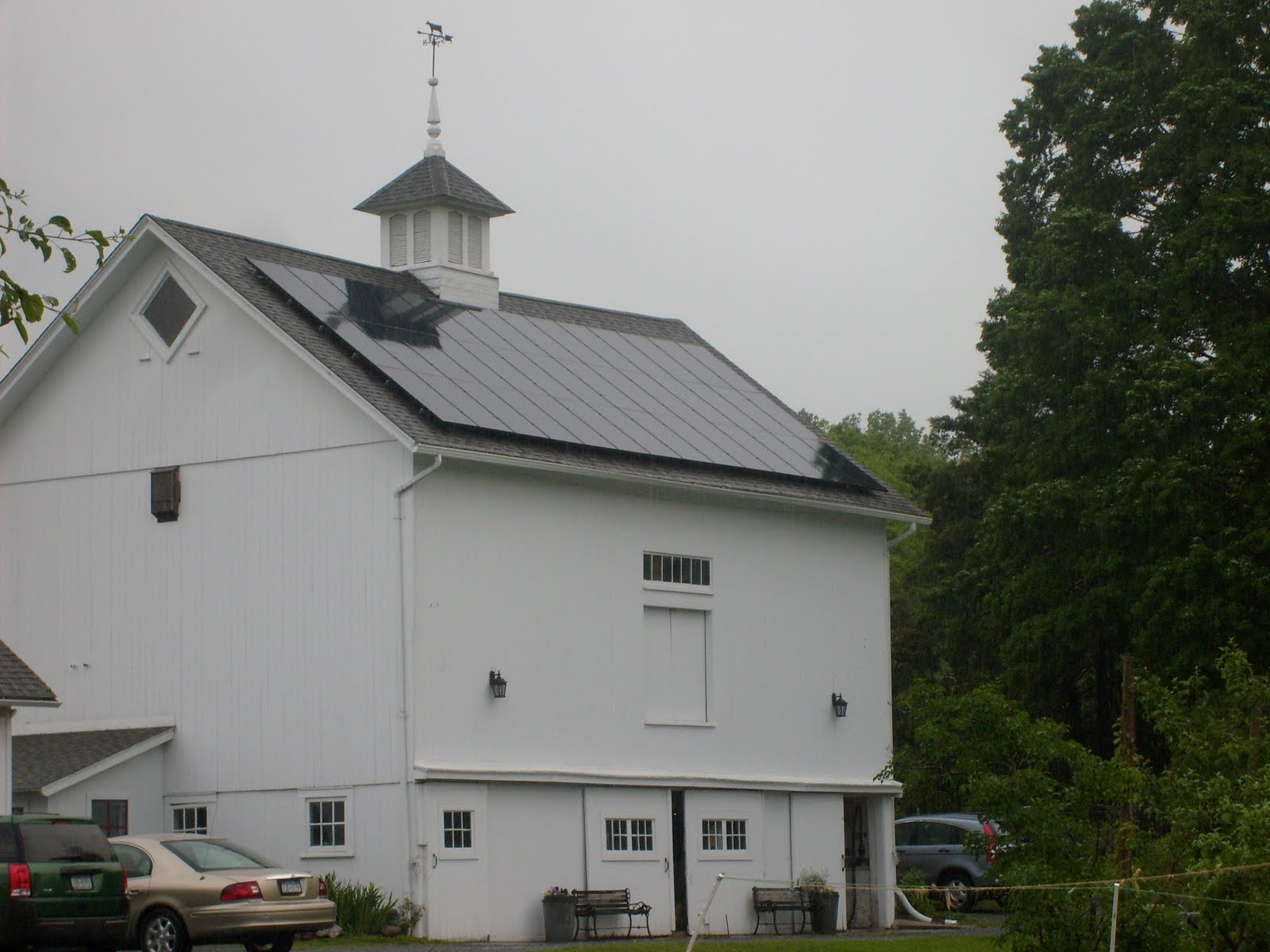
Her advice is to start with the small and do-able, then expand with time, experience, and a better understanding of the needs of the consumers. For her predominantly Westchester suburbanite consumers, Linsay’s strategy is to have customers pre-order exactly what kinds and amounts of vegetables, flowers or herbs they want. Twice a week orders are picked-up at Kitchawan Farm - a beautiful 19th century style and 21st century solar-powered homestead. Harvesting is done morning of making “Linsay’s Market Garden” the freshest produce in town.


After the tour a group of nearly three dozen sat down to a potluck dinner. Introductions revealed attendees came from Hilltop Hanover Farm & Environmental Center in Yorktown Heights, Glynwood Center  in Cold Springs, Pfieffer Center in Chestnut Ridge, Ryder Farm in Brewster, a handful of other farms, and even a newbie independent farmer from New Jersey. Announcements included a gracious “Thank you!” to our host Linsay and her brothers Alex and John, foresight excitement for future CRAFT workshops, and even an announcement that the Westchester Land Trust is actively working to connect farmers to lease-able farmland.
I look forward to a summer of CRAFT! Until then keep your ears up on the latest news that for the first time in history a case is being presented to the US Supreme Court on genetically engineered foods, with specific grievances against Monsanto’s Round-up Ready GM alfalfa which threatens organic alfalfa growers’ ability to remain organic due to inevitable cross pollination between GM alfalfa and wild roadside and organically farmed alfalfa. The California-based sustainable agriculture legal advocacy group Center for Food Safety is representing Oregon-based organic growers Geerston Seeds Farm. This will be a landmark case to determine if genetically engineered food crops be required to have an analysis of the environmental, economic, and social impacts of such a commodity on society before entering the market.